This is the eighth installment in this series. You can find the earlier installments by clicking on the Reclamation tag. Thanks for visiting.
My dad was born in 1940 somewhere around San Antonio. His first experience of life was the doctor dropping him on his head. From what I’ve heard there was no immediate thought that he’d been harmed, though decades later doctors did a brain scan and discovered that basically half his brain had been shut down, and had, for lack of a better term, rewired itself so that he was able to function normally.
A few years later, he contracted childhood polio, as did lots of kids in those days. The polio vaccine wouldn’t come along for about another decade, and despite what some people who have more power than they should ever be allowed to wield say, it basically wiped out the disease in the US by the time I was old enough to take my first doses of it.
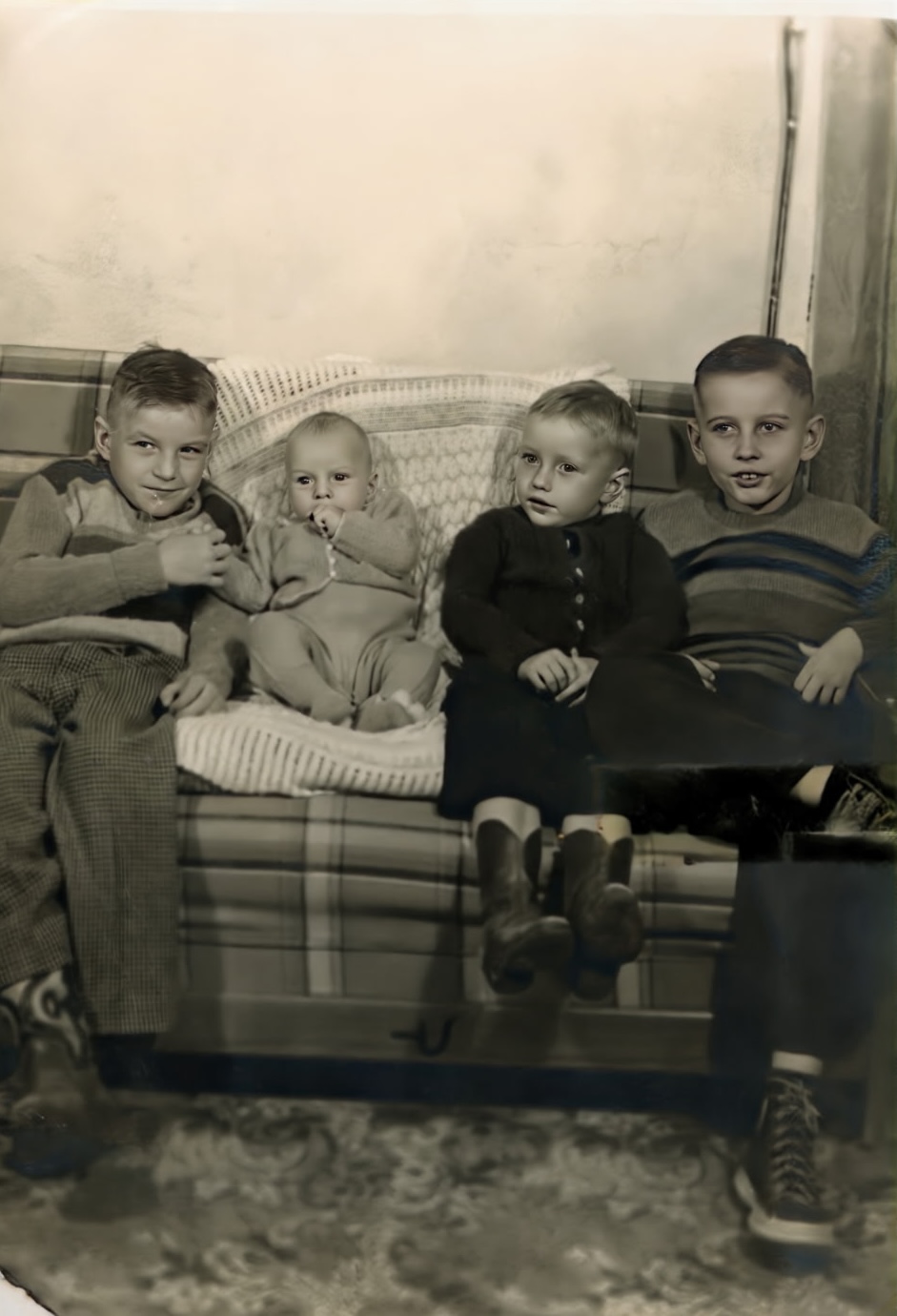
Now it’s true that most kids who got polio didn’t suffer many long-lasting effects from it. That wasn’t true of my dad. He suffered lifelong partial paralysis of his left side. He walked with a limp and had a curved spine that would cause him chronic pain (which made him short-tempered). He had maybe 10% use of his left arm.
If you’re around my age, so early Gen X, mid-50’s, then you can picture him because you saw adults with those symptoms growing up. There are far fewer of them these days because, well, vaccines work.
My dad didn’t talk much about being disabled as a kid except when he was telling my sister and me to be tougher, because he’d had to be. And it’s not like the schools I went to protected us. I traded punches more than a few times though junior high school, though only when I couldn’t avoid it, and I caught some paddling from the principal and teachers on occasion too. Some of it was because I started wearing glasses when I was in kindergarten, and sometimes it was because I hadn’t quite learned when not to speak. Or how not to speak.
I’m better at that now, though I still have my moments. While I believe in my heart that physical is almost never the best answer to a problem, I have to admit that catching a hand or two taught me about how to talk and not talk to people generally, and honestly, relearning those lessons in the internet age, first in blog comments and then later on social media, has been harder even with the benefit of experience. There’s plenty of people online who’ve never learned them, more’s the pity.
My dad was physically bigger than average. If polio hadn’t curved his spine, he’d probably have stood 6’2”, and despite his disability, he played baseball in school. He was a pitcher and would shift his glove to his right hand after releasing the ball in case it was hit to him. He batted one-handed, though he admitted it was for the best that pitchers weren’t expected to hit well.
Even so, he was often the subject of bullying, both verbal and physical. Because of this he deflected in a way that was common at the time: humor. He would laugh at himself before the bullies could do it.
But he also had to occasionally respond to physical attacks, and the lesson he forever emphasized to my sister and me was that there’s no such thing as a fair fight. You try to avoid it if you can, but if the only way out is violence, then everything is on the table. It’s fine to hit someone from behind or kick them in sensitive spots or use nearby objects as weapons. He told me about a time when he was on the playground at school and he was cornered and he picked up a stick and knocked the other boy down, and when he got up, my dad knocked him down again and so on, until the boy left him alone.
This is why I can never bring myself to say that violence is never the answer. I think there are mostly better answers and that it’s always worth reexamining the question, but sometimes it’s effective.
But when you’re a kid, everything is immediate and the most important problem in the world. You haven’t learned to regulate your emotions yet. The world is at stake for every little thing. I think that’s what makes us so willing to fight, to lash out violently over just stupid shit, because we can’t accept that who won the football game doesn’t matter.
Really the problem is that we don’t know who we are at that point in our lives so we put extra meaning and identity into those things that surround us, where we’re from, what teams we root for or what social stratum we’ve been placed into by our peers. And there’s a big part of any population who never figures that out, who doesn’t know who they are, so they listen to people who tell them they’re great and would be even greater if not for those other people keeping them down, stealing their rightful places in a school or at a job or in society at large.
Another really challenging thing about all this is that you can really know who you are in one aspect of your life and be really uncertain in another and so be susceptible to that kind of manipulation. I think if any of us look at ourselves honestly, we can recognize our weak points, the places where we can get got. I know what some of mine are, and I’m sure I have others.
I mean I’m not going to tell you about them. That’s for me and my therapist to talk about when I get back from Romania next year. I expect I will be hunting every empty spot on that calendar.
This section of Reclamation revolves around the Frost line “Something we were withholding made us weak.” Frost is claiming in this part of the poem that what really turned the British colonists into Americans was the surrender of themselves to this new land—he says that explicitly in the next two lines—and that it was the unwillingness to leave the teat of the Motherland that was making them weak.
I reframed this line first by breaking it in half at the word “were” so that it ends the sentence “It’s just / something we were.” The Frost line doesn’t always work as the pivot of my responses but it does here. The speaker, an adult remembering himself at around ten years old, first defines himself against another place, the state next door, a place he honestly doesn’t know well at that age. It’s just not here, and that’s enough for him because he exists in a place and time where allegiances are gut-level and local and the stakes are everything right now and won’t be remembered tomorrow.
Reclamation part 8
The other state we knew was Mississippi
which didn’t have a real football team
so even though the Saints were always trash,
we had them and they didn’t and that’s all
that matters when you’re ten and the world
is what you see and who you have to fight.
You don’t question it at that age. It’s just
something we were. Withholding made us weak
and weakness was punished in the far
corners of the schoolyard where some days
the live oaks dropped branches small enough
to wield and that was enough to make
the rest back off until tomorrow at least.
We never aimed to be the best—no one
ever said that was an option—just better
than the crackers two hours down the road.
Thanks as always for reading. If you’re enjoying this series or the other writing I’m doing about poetry, please share the link with someone you know. Social media is great, but I’ve found that folks are more likely to read something if you send it personally.
I mentioned Romania above. If you’re not aware, my wife, the writer and artist Amy Letter, is currently serving as a Fulbright Scholar and we’re currently living in Iași, Romania, near the border with Moldova. We’ll be here for the coming school year, learning all about this amazing place. We spent last week in Bucharest at the Fulbright Orientation and toured a palace and a museum of Romanian history as well. You can find writing and photos from the events at Amy’s Substack and at my Patreon page. Patreon supporters will receive a handwritten postcard from me every month. I’m about to put the first batch in the mail, but there’s still time to get one. Sign up now.


